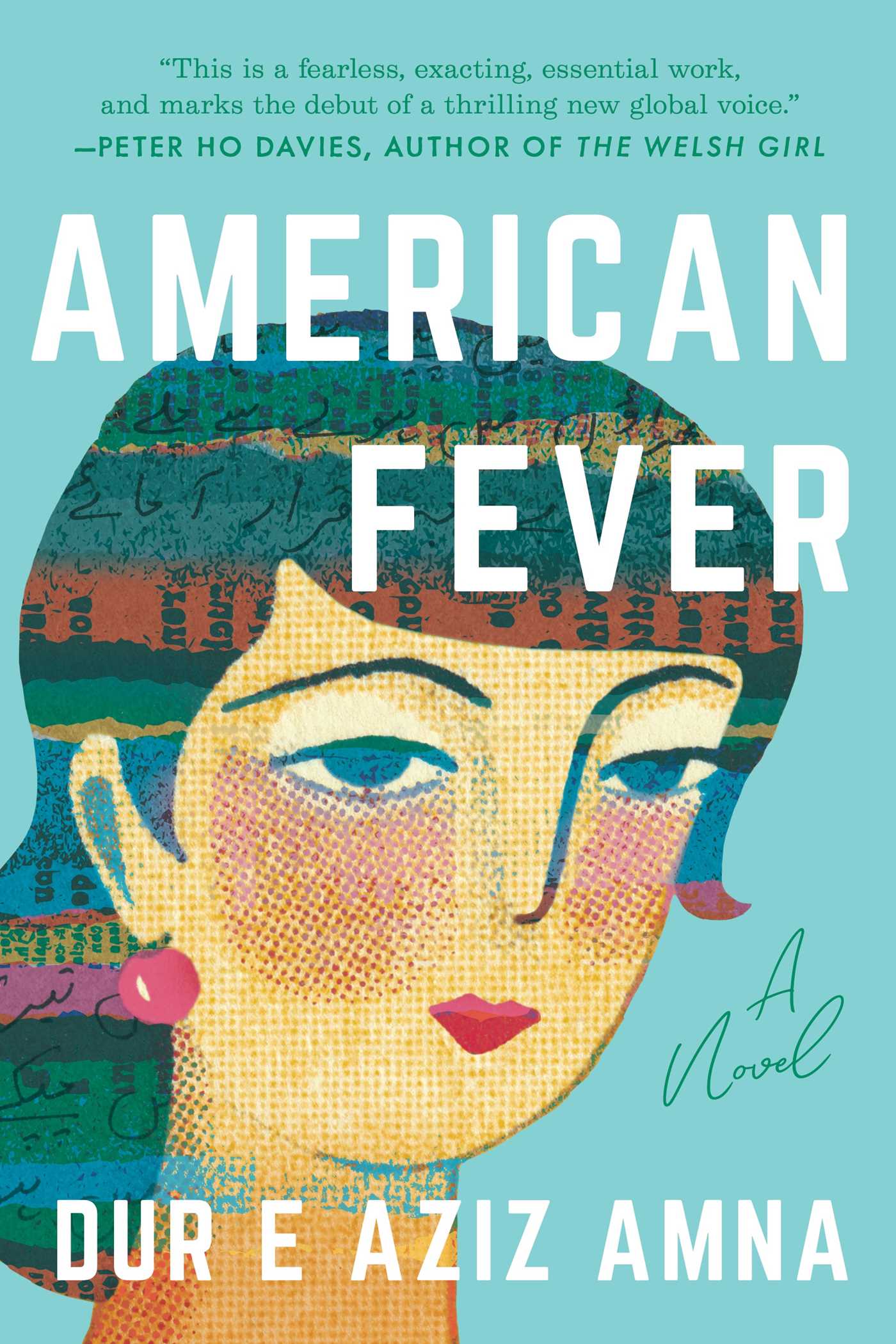
Dur e Aziz Amna, American Fever (2022)
Content warning:
Death, discrimination and bigotry
Synopsis
American Fever sees sixteen-year-old Hira travel from the bustling metropolis of Rawalpindi, Pakistan to the tiny town of Lakeview, Oregon for her 2010-2011 exchange year in the United States. As we see through her wry first-person narration, this is not an America Hira expected or could have imagined. She lives with single mother Kelly and her daughter Amy and attends a rural high school of mostly white students. This experience is worlds away from that of another Pakistani exchange student she visits, who lives in an ethnic enclave with a South Asian Muslim family in urban New Jersey. Hira is fascinated by Americans’ different relationships to their bodies, by Kelly’s expectation that she cook for herself, by how class does not translate neatly across the nations, by how little those around her know about the world beyond them. Compounding her isolation in an unfamiliar place, Hira (as we learn in the novel’s opening pages) develops tuberculosis and must quarantine.
Essay
In our class discussions about “Oregon literature,” we tended to feel that an author should have some connection to Oregon for their work to be considered Oregon literature. At the same time, we didn’t want to gatekeep that connection, and felt that temporary presence should absolutely count. Hira, whose experiences are inspired by Amna’s own, occupies a special position as a foreign exchange student—she is not an immigrant, as she never intends to stay, but is much more than a vacationer. American Fever offers a particular outsider’s perspective on rural Oregon, filtered through ideas about “America.”
Though there is a Lakeview in Oregon, it (located in the Southeastern Oregon desert) is distinctly not the town Amna describes, which is commuting distance from Eugene. This Lakeview is likely based on Blachly, as Amna thanks her “generous hosts in beautiful Blachly” in the acknowledgments. Why might Amna choose to fictionalize her locale? There are occasional references to Oregon landmarks like Heceta Head, but for the most part, Oregon remains quite vague compared to metropolises like Rawalpindi, New York, and San Francisco, which Amna (even on brief visits) endows with a rich texture of place. In my estimation, Amna keeps the location deliberately unspecific because, though very much inspired by Oregon, this is not primarily a novel about Oregon. Hira even says, “This is not an account of how America was. It’s an account of how I was” (166). Oregon is completely “disparate from the rest of [Hira’s] life”—she reflects, “Nothing I had experienced in Oregon—neither the smell of the pillow nor the sound Kelly’s car made on asphalt—could be likened to life back home” (140, 59). Amna wants to paint a portrait not of rural Oregon, but of how a Pakistani teenager shifts her perspectives based on it.
The controlling image of the U.S. abroad is New York City. The immigration officer asks as she departs Pakistan, “Kahan ja rahi hein?” (Where are you going?), and when Hira says Oregon, he asks, puzzled, “Kahan” (48)? She amends to “New York.” In comparison, Oregon is provincial. When Hira visits her cohortmate Zahra in Edison, New Jersey, a suburb that (speaking from my personal experience) feels closer to a South Asian city than to any place in Oregon, Zahra says, “It’s not my fault your America sucks” in comparison to the dream of New York (161). In a post-9/11 U.S. (9/11 being, as well, a New York City event), the controlling image of Pakistan is terrorists, and Hira and a fellow Muslim exchange student in Lakeview endure countless bin Laden jokes. Hira trades in her own stereotypes, which at least in this way, are confirmed: “Americans were rural and ignorant, or they were urban and slightly less ignorant” (166). At the same time, getting to know Lakeview, Hira cannot simply reduce everyone to stereotypes—characters like Kelly remain complex in the novel and in Hira’s mind.
This is, ultimately, a novel about what it means to leave a place. To that end, Amna very intentionally opens with several chapters set in Rawalpindi. Most everything about Oregon is foreign and unexpected to Hira, but, given how deeply she identifies as a “leaver,” what mystifies her the most are the people who never want to flee their rural hometown. Oregon disrupts Hira’s understanding of the U.S. as a nation, her assumptions about rurality and urbanity, but in some ways, cements her ideas about herself even as she returns to Pakistan transformed.
Author Bio
Dur e Aziz Amna grew up in Rawalpindi, Pakistan and currently lives in New Jersey. She earned her MFA from the Helen Zell Writers’ Program at the University of Michigan. As a high school student, she spent an exchange year in rural Oregon, and this experience inspired American Fever. American Fever was her first novel; her second, A Splintering, which is set between rural and urban Pakistan, came out in 2025.
Further Reading
Johanna Ogden, Punjabi Rebels of the Columbia River (2024)
- History of early South Asian immigrants to Oregon
Oliver de la Paz, The Diaspora Sonnets (2023)
- Poems from an immigrant perspective that look back to the Philippines
Amelia Diaz Ettinger, Learning to Love a Western Sky (2020)
- Poems about immigration and searching for home in rural Oregon